
Echo Corner
Project / A Space Designed to Encourage Student Connections
Duration / 5 Months
Collaborator / School Mental Therapist
Role / Solo Designer (End-to-End)
Software / Miro, Illustrator, Photoshop, Sora Ai
Skills / Project Management, Market Research, Strategic Thinking, Creative Solution
To reduce students’ feelings of loneliness and minimize drop-out rates
For first-year and international students
At art and design colleges.

Today’s students often struggle to build relationships due to digital communication habits and social anxiety.
Why It Matters

65%
of college students in the United States report feeling lonely.

1 in 4
students who feel lonely end up dropping out of school.

$16B
in lost revenue to colleges each year.
106 Responses / 7 Interviews
1 Critical Insight
First-year students are not struggling to meet people.
They are struggling to feel a sense of belonging and express themselves authentically in unfamiliar environments.


Gwinn, Freshman
“I wish someone could guide methrough the school’s academic system because it’s hard for me to navigate.”

Sky, International Senior
“I want people from my department
who share similar interests to join the activity together.”


Ysa, International Junior
“My fear is that I couldn’t fit.”
Kedrick, Junior
“I need an inclusive environment where I can share my ideas comfortably without fear of judgment.”

Ankita, International Grad
“If I don’t know anyone there, I just freeze.”

Chloe, BeeWell Therapist
“Students need to understand that building long-lasting and deep
relationships requires effort and time.”

Alexia, Sophomore
“There’s not much strong connections among students in my major.”
Design Opportunity
How might we design an environment
where students feel emotionally safe
to express themselves
without fear of judgment?

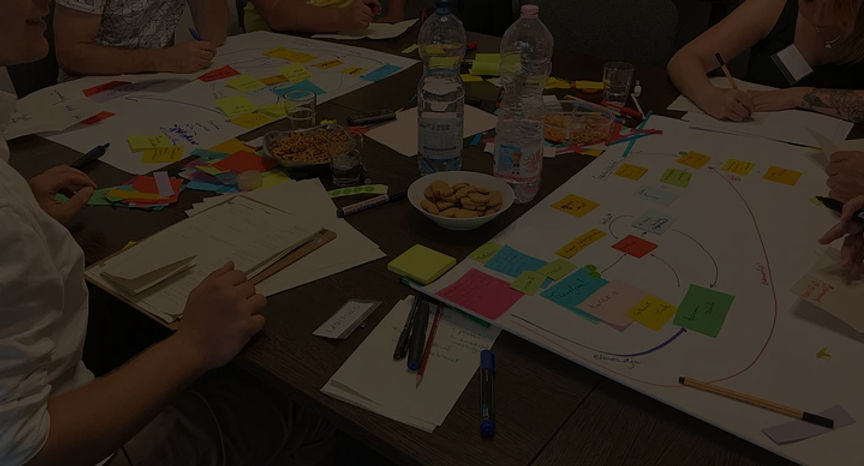
Co-Creating with Students
After identifying our design opportunity, we invited students to join co-design workshops to explore how meaningful relationships form in everyday campus life.
Students emphasized the need for a supportive, home-like environment that encourages connection through shared interests and meaningful activities. We also explored interaction patterns, social preferences, and conditions that help students feel comfortable starting connections.
Design Principles

Shared Interests First
Connections begin more naturally when students discover common interests.

Low-Pressure Participation
Connections begin more naturally when students discover common interests.

Emotional Support Matters
Connections begin more naturally when students discover common interests.

Sunlight
Assistance
Plants
Single Sofa
Interaction
Easily Comment
Introducing Echo Corner
An accessible on-campus interaction space designed to support spontaneous encounters between classes. Through shared interests and common experiences, students can more comfortably express their feelings, seek support, and develop meaningful connections with one another.
The three themed spaces focus on students' shared interests, strengths, and life challenges, using these common experiences as catalysts for connection and helping students build relationships in a natural and comfortable way.

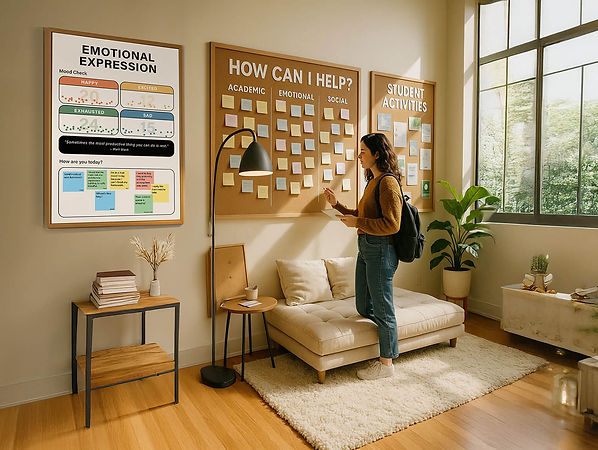
A digital Mood Sharing Board is placed throughout the space, encouraging students to reflect on and share their emotions, fostering self-awareness, empathy, and a culture where emotional expression is normalized.
.jpg)
Students can optionally join interest-based digital communities to deepen connections and continue meaningful conversations.
Reflection
Designing for Relationships, Not Just Interactions
Through this project, I learned that meaningful relationships cannot be designed directly. Instead, designers can create the conditions that make connection more likely to happen. Shared interests, repeated encounters, and low-pressure interactions often play a greater role in relationship building than structured social events.


Co-Creating Solutions with Users
Rather than designing for students, we invited students to become active participants in the design process. Co-design workshops helped us uncover social behaviors, emotional needs, and environmental preferences that directly informed the final solution.

Value Delivered
Meaningful Connections Without Pressure
Enabled students to build authentic relationships through shared interests and everyday interactions, creating opportunities for connection without the pressure of forced socialization.
Reduced Loneliness & Improved Retention
Targeted a 5% reduction in student loneliness within two years, supporting student well-being while potentially preventing up to $1.5M in tuition revenue loss through improved retention.
Stronger Sense of Belonging
Fostered a more inclusive campus experience by helping first-year students feel seen, supported, and connected during their transition into college life.
Related Works

BMW X SCADPRO
A Future Driving Experience

Mushloom
A Sofa Designed to Foster Social Interaction